
GAN Aptitude Test Study Guide – Master the GAN Aptitude Test for Apprenticeships

Many apprenticeship programs across various trades, from electrician work to plumbing, rely on the GAN Aptitude Test to evaluate potential candidates. This critical assessment is designed to gauge a wide range of essential skills, including math, reading comprehension, and spatial reasoning, ensuring applicants have the foundational capabilities required for success in their chosen field.
In this guide, we’ll dive deep into the significance of the GAN Aptitude Test, uncovering why it plays such a pivotal role in the apprenticeship selection process. We’ll explore the structure of the test, what skills it assesses, and why excelling in it is crucial for aspiring apprentices. Armed with the right strategies and insights, you’ll be better prepared to tackle this test head-on, setting the stage for a successful career in the trades.
Table of Contents
What is the GAN Aptitude Test?
The GAN Aptitude Test, developed by gan human resources and crafted by Dr. George Neuman, stands out as a comprehensive tool for evaluating potential apprentices. With Neuman’s extensive background in Industrial-Organizational Psychology, alongside degrees in Management, Economics, and Education, this test is built on a foundation of expertise.
It’s designed to assess a broad spectrum of skills essential for a variety of job roles, making it a critical step for candidates aspiring to enter apprenticeship programs in numerous trades.
Specializing in the apprenticeship sector, the gan test aims to ensure that applicants possess the necessary math, reading comprehension, spatial reasoning, and problem solving skills required for success in their future roles. By providing a thorough evaluation of these foundational abilities, the test helps apprenticeship programs identify and select candidates who are best suited for the demands and challenges of their chosen trade.
Understanding the GAN Aptitude Test structure
The GAN Aptitude Test is a sophisticated tool designed to measure the aptitude of individuals applying for various apprenticeship programs. It’s structured into five distinct sections: Paper Folding, Numerical Computation, Numerical Reasoning, Reading Comprehension, and Mechanical Reasoning.
As part of the GAN Aptitude Battery, this assessment provides a standardized way to measure readiness across core skill areas. Each of these sections targets specific cognitive abilities and skills, setting a comprehensive framework to evaluate candidates’ readiness for the demands of technical and trade professions.
- Paper Folding focuses on spatial visualization skills, challenging test-takers to mentally manipulate shapes and predict outcomes of folding and unfolding paper.
- Numerical Computation tests basic arithmetic proficiency, including operations with whole numbers, fractions, and decimals.
- Numerical Reasoning evaluates logical thinking and pattern recognition through the analysis of number series.
- Reading Comprehension assesses the ability to understand and interpret written material, a fundamental skill for learning and communication in any trade.
- Mechanical Reasoning measures knowledge of physical and mechanical principles, crucial for many technical roles.
Each section not only gauges specific aptitudes but also tests the ability of examinees to apply their knowledge under time constraints. Success in the GAN aptitude test requires a well-rounded preparation strategy that encompasses mastering the content, practicing similar types of questions common to cognitive ability tests, developing effective test taking strategies, understanding how to reach the correct answer, and honing time management skills.
This structured approach ensures that candidates are not only proficient in fundamental skills but also prepared to tackle the challenges of their chosen apprenticeship programs with confidence.
GAN Aptitude Test scores range from 0 to 100, and each section is scored based on the number of correct answers. Those results are then combined with Personal Experience Form information, and there is no specific passing score for the test.
GAN Paper Folding Section
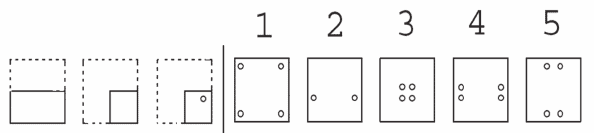
Key Details
- Task Overview: You’ll see diagrams depicting a paper being folded multiple times with holes punched. Your job is to choose the option that accurately represents the paper’s final look when unfolded.
Skills Tested
- Spatial Awareness: The ability to understand how objects occupy space.
- Visualization: The skill of mentally manipulating and rotating objects.
- Attention to Detail: The capacity to notice minor differences between options.
Tips for Success
- Practice With Real Paper: Use actual paper to fold and punch holes, observing the outcomes when unfolded to get a tangible sense of the task.
- Visualize the Process: Try to mentally fold and unfold the paper, tracking where the holes end up.
- Attention to Detail: Pay close attention to the sequence of folds and the placement of holes in each option.
By focusing on these key areas and incorporating practical exercises into your preparation, you can enhance your performance on this unique section of the GAN Aptitude Test, building a foundation for success in both the test and your future career.
GAN Numerical Computation
The Numerical Computation section is a pivotal part of the GAN Aptitude Test, focusing on your mastery of basic math and arithmetic operations.
This portion of the test includes 30 questions to be answered in 30 minutes, emphasizing the need for both speed and accuracy in solving arithmetic problems involving whole numbers, fractions, and decimals. Use free practice and practice problems to build speed under timed conditions.
Essential Insights
- Test Focus: The essence of this section lies in evaluating your arithmetic proficiency—how well you add, subtract, multiply, and divide. It goes beyond mere calculation to include fractions and decimals, challenging you to apply these operations in various scenarios.
Skills in Spotlight
- Arithmetic Operations Mastery: The core of this test section is to assess your fluency in addition, subtraction, multiplication, and division.
- Fraction and Decimal Handling: Beyond basic operations, this section tests your ability to work with fractions and decimals, critical skills for both academic and real-world applications.
- Practical Problem Solving: The ability to quickly and accurately perform calculations is essential for tackling real-life problems, from budgeting to project planning.
Strategies for Success
- Strengthen Your Foundation: Regular practice with arithmetic exercises, especially those involving fractions and decimals, can significantly improve your proficiency. Using practice questions and reviewing incorrect answers helps improve understanding.
- Apply Real-world Scenarios: Enhance your understanding and speed by applying arithmetic operations to solve everyday problems, such as calculating discounts or splitting bills.
- Practice Under Timed Conditions: Simulate test conditions by practicing arithmetic problems with a 30-minute timer to enhance your speed and accuracy while getting used to time pressure.
By honing these arithmetic skills, you not only prepare to excel in the Numerical Computation section of the GAN Aptitude Test but also equip yourself with practical abilities that are invaluable in everyday life and your future career. This comprehensive approach to preparation ensures you’re not just test-ready but also life-ready.
GAN Numerical Reasoning
The Numerical Reasoning section of the GAN Aptitude Test is designed to stretch your mind and sharpen your logical thinking skills.
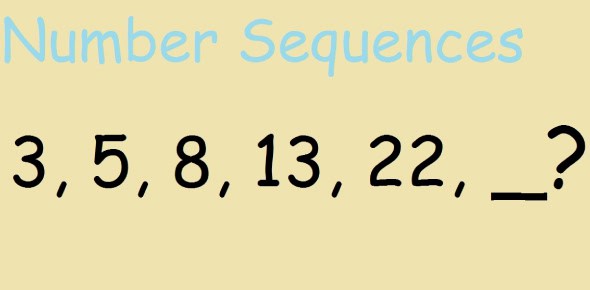
With 20 questions to be answered in 22 minutes, this segment tests your ability to spot patterns and sequences in numbers, a skill that goes beyond academic achievements and plays a crucial role in problem-solving and decision-making in various aspects of life.
Insightful Overview
- Focus of the Test: This section evaluates your prowess in identifying logical sequences in numbers, requiring you to deduce the underlying patterns to predict subsequent numbers in the series. Items are typically presented as multiple choice questions, and one useful strategy is checking the next difference between adjacent numbers to spot the rule.
Highlighted Skills:
- Logical Reasoning: At its core, this test measures your capacity to think logically and systematically, vital for both personal and professional success.
- Pattern Recognition: The ability to recognize patterns not only aids in solving mathematical sequences but also enhances your analytical skills, useful in interpreting data and making informed decisions.
- Application of Mathematical Concepts: Beyond mere number crunching, this section challenges you to apply basic mathematical principles in creative and insightful ways.
Mastering the Numerical Reasoning section not only propels you towards success in the GAN Aptitude Test but also equips you with critical thinking and analytical skills that are indispensable in navigating life’s challenges. This multifaceted preparation approach ensures you’re developing skills that are as valuable in real-world scenarios as they are in academic tests.
Resources like Khan Academy have great videos on learning number patterns.GAN Reading Comprehension

The Reading Comprehension segment of the GAN Aptitude Test is more than just an assessment of how well you understand written material; it’s an opportunity to refine a skill set that’s pivotal in almost every aspect of life.
With 42 questions to tackle in just 25 minutes, this section not only tests your ability to quickly grasp the essence of a text but also evaluates your proficiency in identifying key details, making inferences, and understanding context.
Cultivating Critical Understanding
- Test Insight: This segment immerses you in a variety of passages, followed by questions aimed at testing your grasp of the main idea, your inferential reasoning, and your contextual vocabulary knowledge.
Skills for Beyond the Test:
- Comprehensive Understanding: Mastery in reading comprehension extends beyond academic purposes; it enhances your ability to process information, make informed decisions, and understand complex materials in everyday life.
- Critical Thinking: Interpreting texts and drawing conclusions develop critical thinking, a skill highly valued in personal decision-making and professional environments.
- Vocabulary Expansion: Engaging with diverse reading materials not only prepares you for the test but also broadens your linguistic range, improving communication and comprehension skills in all areas of life.
Building Your Comprehension Arsenal
- Diverse Reading: Expand your reading beyond textbooks to include fiction, non-fiction, articles, and reports to encounter a wide range of vocabulary and writing styles.
- Reflective Reading: Make it a habit to reflect on what you read by summarizing the content, questioning the author’s intent, and connecting the material to your own experiences or existing knowledge.
- Efficient Reading Techniques: Develop skills like skimming for main ideas and scanning for specific information to improve both speed and accuracy, essential techniques for excelling in the Reading Comprehension section. On test day, pace yourself across the 42 questions and avoid spending too long on any one passage.
Improving your reading comprehension skills through the GAN Aptitude Test preparation can offer significant benefits in both your academic pursuits and daily life. This comprehensive approach not only aims to boost your test scores but also equips you with the critical thinking and analytical skills necessary for lifelong learning and success.
GAN Mechanical Reasoning
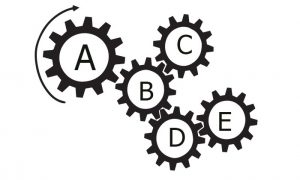
The Mechanical Reasoning section of the GAN Aptitude Test offers a window into the practical application of physical and mechanical principles, challenging you to navigate through 45 questions in 30 minutes. This segment is not just a test of your theoretical knowledge; it’s an assessment of your ability to apply this knowledge to understand the workings of simple mechanisms and the forces that act upon them in everyday scenarios.
Exploring Mechanical Concepts
- Test Dynamics: This section brings to life the fundamentals of mechanics through pictures that depict various mechanisms or physical scenarios, asking you to deduce the correct outcome based on mechanical principles.
Skills for Real-World Application:
- Principles in Action: Beyond the classroom, the understanding of forces, motion, and simple machines like levers, pulleys, and inclined planes plays a critical role in troubleshooting and innovation in fields ranging from engineering to everyday problem-solving.
- Mechanical Insight: Developing an intuition for how and why things work the way they do is invaluable, fostering a mindset that thrives on curiosity and analytical thinking.
- Problem-Solving Prowess: The ability to decipher mechanical problems enhances critical thinking and can lead to more efficient and creative solutions in both professional tasks and daily life.
Cultivating Mechanical Acumen
- Observe and Analyze: Take everyday objects and mechanisms apart in your mind, understanding how they function and why. This practice builds a mental library of mechanical concepts.
- Engage with Real-world Examples: Whether it’s fixing a bicycle, using a pulley system, or understanding the mechanics of a car, hands-on experiences solidify your understanding of mechanical principles.
- Leverage Educational Resources: Utilize videos, simulations, and interactive tools that illustrate mechanical concepts in action to bridge the gap between theory and practice.
By integrating mechanical reasoning into your daily thought processes, you prepare not only to excel in the Mechanical Reasoning section of the GAN Aptitude Test but also to enhance your problem-solving capabilities in a way that impacts both your personal and professional life. This approach ensures you’re not just learning for a test but gaining knowledge and skills that will serve you for a lifetime.
Frequently Asked Questions
What is the GAN aptitude test?
The GAN aptitude test is a standardized entrance exam that apprenticeship programs use to measure the math, reading, spatial, and mechanical skills an applicant needs to succeed in the trade. It was developed by GAN Human Resources and built by Dr. George Neuman, an industrial-organizational psychologist. Programs treat it as an objective first filter, so your score carries real weight in whether you move forward in the selection process.
How many sections are on the GAN aptitude test?
The GAN aptitude test has six sections: Paper Folding, Numerical Computation, Numerical Reasoning, Reading Comprehension, Mechanical Comprehension, and Problem Solving. Each section is timed separately and targets a different skill, which is why preparation has to be broad rather than focused on math alone.
How long is the GAN aptitude test?
Each section is timed on its own rather than run as one continuous block. The five sections covered in this guide account for roughly 137 minutes between them, so plan on a sitting of more than two hours once check-in, instructions, and the Problem Solving section are added. Timing is tight in every section, and Reading Comprehension is the tightest of them all.
What is a passing score on the GAN aptitude test?
There is no fixed passing score. Results are reported on a 0 to 100 scale and combined with your Personal Experience Form rather than judged on their own, so no single number decides the outcome. Because applicants are ranked against one another, a stronger score still improves your position in the pool even without a formal cutoff.
Is the GAN aptitude test the same as the IBEW aptitude test?
No, they are two different exams. The IBEW aptitude test covers algebra and functions plus reading comprehension across two sections, while the GAN is considerably broader and adds spatial, mechanical, and problem solving content. Some locals use the GAN in place of the standard IBEW exam, so confirm which test your local administers before you build a study plan around the wrong one.
Which apprenticeship programs use the GAN aptitude test?
The GAN is used across several trades, and within the IBEW it is used by locals that have moved away from the standard aptitude test. Locals confirmed to use it include Local 100 in Fresno, Local 103 in Boston, Local 265 in Lincoln, Nebraska, and Local 292 in Minneapolis, with Local 134 in Chicago reported by applicants. Programs do change their testing over time, and a local’s own application page often lags the switch by months, so if the JATC website still describes an algebra and reading test followed by a panel interview it may simply be out of date. Call the training office and ask which test you’ll be sitting.
Is there an interview after the GAN aptitude test?
Locals that use the GAN generally replace the traditional panel interview with the Personal Experience Form. Rather than sitting in front of a panel of IBEW and NECA representatives, you document your work history, training, and related experience in writing, and that form is scored alongside your test result. That makes the PEF worth as much preparation as the exam itself.
Do I need trade experience to take the GAN aptitude test?
No. The GAN measures aptitude rather than trade knowledge, so you don’t need prior electrical or construction experience to sit for it or to score well. The Mechanical Comprehension section draws on everyday physical principles like levers, pulleys, and gears rather than anything taught in an apprenticeship, though hands-on experience with tools and machines does tend to make those questions feel more familiar.
How should I prepare for the GAN aptitude test?
Prepare section by section rather than studying in general. Fold and punch real paper to build intuition for the Paper Folding questions, drill arithmetic with fractions and decimals against a timer, work through number series until you spot patterns quickly, read widely and practice summarizing what you read, and review basic mechanical principles. Practicing under time pressure matters as much as knowing the content, because every section is tight and the clock is what catches most applicants out.
Can I retake the GAN aptitude test?
Retake policies are set by the individual apprenticeship program rather than by GAN, and most locals require you to wait before testing again. If you don’t score as well as you hoped, ask your local how long the waiting period runs and whether you need to submit a fresh application, then use that window to prepare properly rather than retesting cold.