
California’s Electrical Trainee Program
California’s Electrical Trainee (ET) pathway lets you build electrical work experience while completing approved schooling. If you’re starting out and aren’t enrolled in a registered apprenticeship, it can provide a route toward state electrician certification.
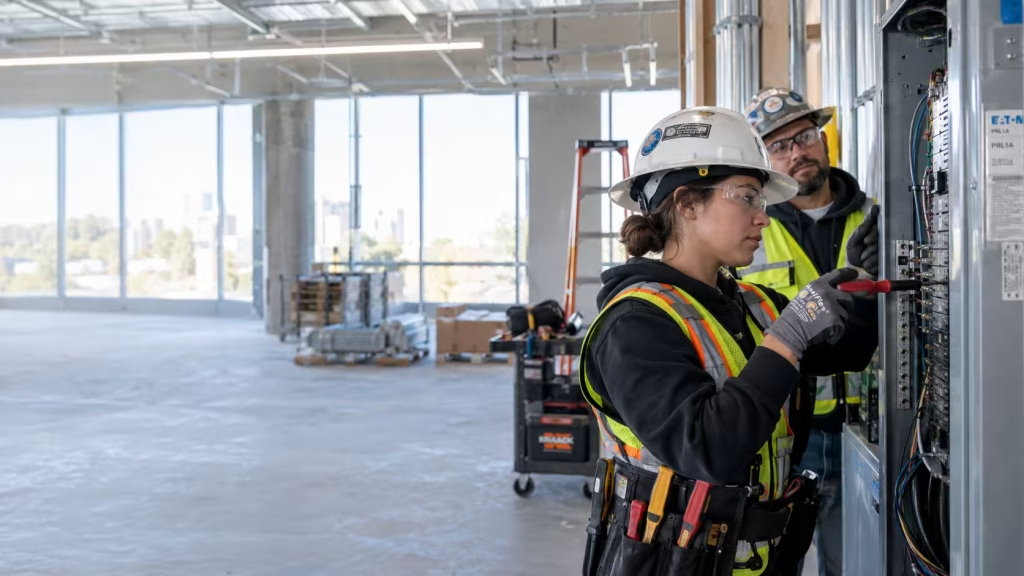
To work through this pathway, you must register with the state, attend or have completed an approved curriculum, and meet the required supervision conditions. An ET card does not authorize you to work independently. California’s trainee requirements explain how those responsibilities fit together.
This guide walks through choosing a school, applying for your ET card, keeping it active, and preparing for certification. For a broader introduction to the trade, see our guide to how to become an electrician.
Table of Contents
What Is an Electrical Trainee in California
An electrical trainee is a person registered with California who is working toward electrician certification through approved education and supervised experience. The state uses the term “electrician trainee” on its forms, although you’ll also see “electrical trainee” and “ET card” in job listings.
This pathway applies to electrical work covered by California’s certification requirements for employees of C-10 electrical contractors. It should not be treated as a rule covering every electrical job in every setting. DIR’s trainee overview explains the route for people who do not yet qualify for certification.
Electrical Trainee vs Registered Apprentice
Electrical trainees and registered apprentices both learn while gaining work experience, but they have different state statuses.
A registered apprentice participates in an approved apprenticeship program. California law separately allows registered apprentices to perform electrical work as part of that program. They do not all need separate ET registration simply because they are apprentices. See Labor Code Section 108.2.
An ET registers through the trainee process and follows the approved-school and supervision requirements. Being called an “apprentice” by an employer does not establish that you are enrolled in a registered apprenticeship.
Before accepting a position, ask which pathway the employer uses and how your training will be documented. If you’re considering a registered program, start with California’s apprenticeship program search and check the sponsor’s admission and employment arrangements.
How to Get Your California ET Card
1. Choose an Approved Electrical Trainee School
Start with DIR’s list of approved electrician trainee schools. It includes community colleges, adult schools, and other training providers. Some listings have enrollment restrictions or inactive status, so check the entry before paying tuition.
Read the detailed school listings as well. Schools may be approved for a whole curriculum or only part of one, and their approved electrician classifications can differ.
Ask the school:
- Does this program cover the full approved curriculum for the certification I want?
- Which classes and attendance requirements will I need to complete?
- What is the total cost, including books and required materials?
- Are classes online, in person, or a combination?
- How will I obtain proof of enrollment, transcripts, and my completion certificate?
- What employment assistance is available?
Compare the actual program, schedule, and cost. A school’s name alone does not tell you whether its offering fits your goal.
2. Obtain Your Enrollment Documents
Once enrolled, request proof of enrollment for your state application. If you have already completed the full approved curriculum, DIR’s required-documents checklist identifies the completion certificate needed for that situation.
Keep copies of these records. You will need school documentation again when renewing your registration and applying for certification.
3. Submit the State Registration Application
Download the Application for New Registration of Electrician Trainee. Complete the applicable fields, enter the approved school’s name and number, attach your supporting documents, and sign the form.
The initial registration fee is $25. The form specifies a check or money order payable to “DIR – Electrician Certification Fund.” Its mailing address is:
DIR – Division of Labor Standards EnforcementAttn: Electrician Certification UnitPO Box 511286Los Angeles, CA 90051-7841
Check the current form before mailing and retain a copy of the complete application.
As of September 2026, DIR says electrician trainee applicants should continue applying by mail. Its online application system covers several electrician certification transactions, but trainee online registration is not yet available. Check the Electrician Certification Program page for updates.
4. Confirm Your Registration and Supervision
Before performing covered electrical work as a trainee, confirm that your registration is active and your employer has arranged the required supervision.
California’s trainee rules require direct supervision by a certified electrician responsible for no more than one uncertified person. The law also permits a C-10 license’s qualifying person to supervise a trainee working for that licensed contractor without holding separate electrician certification. See the trainee supervision requirements and C-10 qualifier provision.
Finding Electrical Trainee Work
Treat school enrollment and your job search as separate tasks unless your program explains otherwise. Ask about employer referrals, but make your own plan for applying to contractors.
Your resume should clearly state your school, training progress, ET registration status, and relevant experience. Be accurate about what you have completed and what is still pending.
During an interview, ask who will supervise you, what work you’ll perform, and how the company records your hours. Also discuss whether the work schedule allows you to attend required classes. These questions help you evaluate whether the position supports your training plan.
How to Renew Your ET Card
ET registration must be renewed annually. There is no state fee for annual renewal.
Use the Electrician Trainee Renewal Application. For trainees still attending school, the form requires current proof of enrollment and an unofficial transcript or school verification of courses completed during the previous year. Complete the employer and experience information it requests.
If you have finished the approved curriculum, attach a copy of your completion certificate with your renewal each year until you become certified. DIR’s trainee FAQs explain this process.
Set a reminder well before your expiration date so you have time to request school records and submit a complete application. Keep copies of every renewal and its attachments.
What Happens If You Leave School
Withdrawing or being reported for nonattendance can make your trainee status inactive. DIR states that inactive ET status does not authorize you to work under a C-10 contractor through the trainee pathway. Reinstatement after withdrawal requires a new registration application, current proof of enrollment, and a $25 fee. Review DIR’s inactive-status guidance.
Completing the approved curriculum is different from withdrawing. Graduates can continue renewing with their completion certificate while they gain the remaining experience.
How Many Hours Do You Need for Certification
The experience requirement depends on the certification classification. Under California’s on-the-job experience route, the required totals are:
| Certification classification | Required experience |
|---|---|
| General Electrician | 8,000 hours |
| Residential Electrician | 4,800 hours |
| Fire/Life Safety Technician | 4,000 hours |
| Voice Data Video Technician | 4,000 hours |
| Nonresidential Lighting Technician | 2,000 hours |
These figures come from California’s certification eligibility regulation. The regulation also sets limits on the hours credited for particular work activities. For General Electrician certification, experience must span at least two listed work areas; 8,000 hours in a single activity does not automatically qualify.
Keep a running record of employers, dates, hours, and the type of electrical work performed. Save pay records and school documents rather than trying to reconstruct several years of experience when you apply.
Certification applications also require an employment history report from the Social Security Administration. Follow DIR’s current application guidance for the report to request. An earnings history supports employment verification; it does not replace accurate records of your work activities and hours.
When Can an Electrical Trainee Take the Exam
Completing the approved curriculum for your classification can make you eligible to take the certification exam before you finish the required experience hours.
However, passing early doesn’t make you a certified electrician right away. You must also submit proof of the required experience and continue renewing your trainee registration until certified. These conditions appear in Title 8 Section 291.2.
Plan your schooling, work experience, and exam preparation together. If you have unusual work history or experience from before your registration, ask the Electrician Certification Unit how it will evaluate your records. Do not assume that every hour worked under an “electrical helper” job title will be accepted.
Preparing for the Certification Exam
As you approach exam eligibility, use the current candidate information bulletin linked from DIR’s Electrician Certification Program page to confirm the tested topics, reference editions, and examination rules.
Build study sessions around the areas you need to improve. Practice locating code provisions, working through calculations, and answering questions within a time limit. Review mistakes until you can explain how to reach the correct answer.
Our free journeyman electrician practice test and guide can help you identify topics to review. For structured lessons and exam practice, explore our journeyman electrical exam prep course and confirm that the edition matches your examination.
Use exam prep alongside your required training. A preparation course does not, by itself, establish eligibility for an ET card or replace an approved trainee curriculum.
Common Questions About California ET Cards
Can I Register Before I Have an Electrical Job
Yes. California’s registration regulation requests current employer information “if any,” so having an electrical employer is not a prerequisite for applying. You still need the required education documentation. See the registration requirements.
Can I Take ET Classes Online
Some approved providers offer online instruction. For example, DIR lists WECA as offering classroom and online formats. Check the approved-school details and ask the provider which classes and any in-person requirements apply to your program.
Is an ET Card a California Electrical Contractor License
No. ET registration is a trainee status within the electrician certification system. A C-10 electrical contractor license is a separate credential issued by the Contractors State License Board. An ET card does not grant a contractor license. See CSLB’s C-10 classification.
Who Can Help With My Application
Contact the Electrician Certification Unit at (510) 286-3900 or [email protected]. Check its official contact page for current details, and have your ET number and application records available when asking about an existing registration.
Start With the Right School and a Clear Training Plan
Choose an approved curriculum that fits your certification goal, submit a complete ET application, and arrange properly supervised work. Then keep your registration and records current as you progress.
When you’re ready to prepare for the exam, start with our journeyman practice test and use your results to focus your study time.