
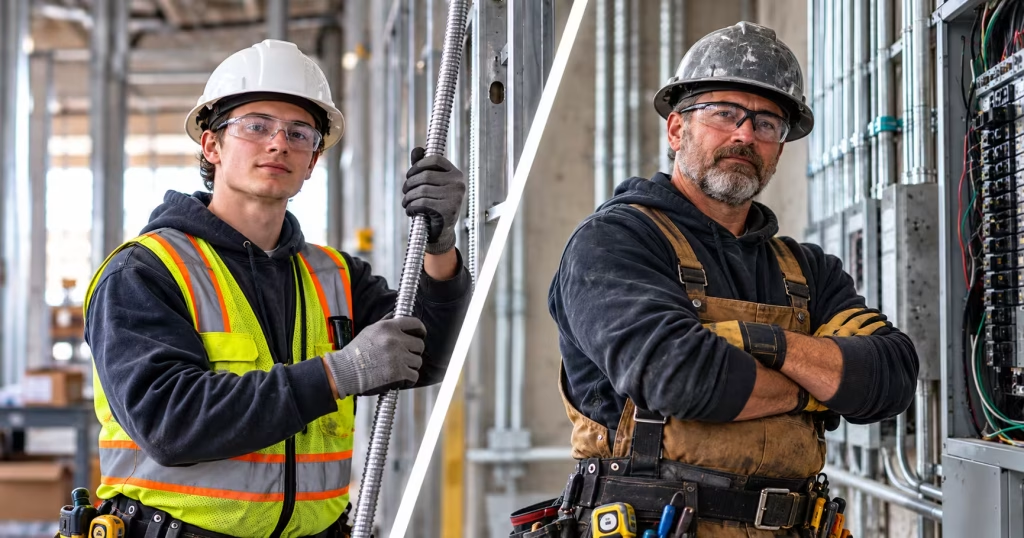
A Construction Wireman (CW) or Construction Electrician (CE) is an electrical worker classified under a participating IBEW local’s CW/CE program or agreement. These programs can give beginners and experienced workers a way to work for participating electrical contractors, develop their skills, and progress toward journey-level qualifications.
CW generally refers to the earlier skill and experience levels; CE refers to more advanced levels. The exact requirements depend on the local program. A CW/CE classification does not, by itself, mean you have entered a registered apprenticeship or earned a state journeyman license.
If you’re considering an offer, the most useful questions are where you’ll start, how you can advance, and whether the training and experience will count toward your long-term goal.
What CW and CE Mean
IBEW stands for the International Brotherhood of Electrical Workers. Its local unions and training partners administer programs under agreements that can differ by location.
A Construction Wireman may be new to electrical work or may already have experience that qualifies them for a higher CW level. A Construction Electrician is generally further along in the local progression, but CE status should not be confused with Journeyman Wireman status.
IBEW Local 540’s CW/CE explanation, for example, describes its CW position as an entry route outside the apprenticeship. It uses four CW pay periods and says workers with more than 8,000 documented hours can qualify to test for CE classification.
Those are Local 540’s rules. Other locals set their own thresholds for moving from CW to CE. Before comparing two programs, obtain each program’s classification and advancement requirements.
How CW and CE Differ From an Apprentice or Journeyman
Construction Wireman and Construction Electrician
CW/CE programs classify workers according to local criteria such as documented experience, demonstrated skills, training, and examinations. They can provide paid work and education while a worker develops toward a higher classification.
For some people, this is a way to gain experience while pursuing apprenticeship admission. For others, particularly workers with prior electrical experience, it can be an alternative progression toward journey-level status.
Registered Apprentice
A registered apprentice is enrolled in a specific registered training program. Registered Apprenticeship combines paid work, structured instruction, mentorship, and progressive wage increases, leading to a recognized credential.
Working as a CW doesn’t automatically enroll you in that program. Taking classes at the same training center also doesn’t establish that you’re a registered apprentice. Confirm your enrollment status and the program you’re actually joining.
Journeyman Wireman
Journeyman Wireman, often shortened to JW, is a separate union classification. State or local electrician licensing is another requirement that may apply to the work.
Ask what your local requires for JW classification and what the licensing authority requires for legal journey-level work. Completing one process should not be assumed to complete the other. Our electrical license requirements by state can help you identify the rules to investigate.
Who Can Benefit From a CW CE Program
A CW/CE opportunity may be useful if you’re starting out, have electrical experience from another employer, or want to pursue union work while continuing to build your qualifications.
The Western Oklahoma Electrical Joint Apprenticeship and Training Committee’s June 2026 brochure describes a program for both experienced and inexperienced applicants. It also identifies CW/CE employment as an option during the application and selection process for its apprenticeship.
A beginner should look for a clear training plan and supervision. An experienced applicant should ask how previous work will be evaluated before accepting an entry-level classification. The brochure says experienced applicants take a practical entrance assessment and that graduates of approved electrical trades programs may receive advanced standing with a certified transcript.
Availability is local. Ask whether the program is accepting applicants at your experience level and whether contractors currently need workers. An application is not a job offer.
What Work and Training Do CWs and CEs Receive
Your assignments depend on the contractor, project, classification, supervision requirements, and applicable law. Ask what work you’ll perform and how the employer will help you develop beyond your starting tasks.
Training can involve electrical theory, trade math, wiring methods, safety, and practical installation skills. The electrical training ALLIANCE of Western Oklahoma lists classroom and hands-on subjects including motors, transformers, conduit work, wiring devices, and jobsite responsibilities.
IBEW Local 716 in Houston describes a practical skills evaluation covering areas such as conduit, devices, panel wiring, lighting, motor controls, transformers, and blueprints. That illustrates how a program may assess what an experienced applicant can actually do, rather than relying only on years in the trade.
Before starting, ask who provides your instruction, which classes are required, and how often assessments are offered. Also find out whether classes take place outside working hours and whether you must pay for books, tools, or testing.
How Much Do CWs and CEs Make
There’s no single national CW or CE wage. Pay depends on the local agreement, classification, and effective date of the wage schedule. Benefits may also change as you advance.
The following is a local example from the Western Oklahoma program brochure. It applies to Oklahoma City and Lawton, with rates effective June 1, 2026.
Classification | Hourly wage | Total hourly package |
|---|---|---|
CW-1 | $19.64 | $20.57 |
CW-1.5 with 1,000 hours | $19.64 | $22.37 |
CW-2 | $21.83 | $24.67 |
CW-3 | $24.01 | $29.95 |
CW-4 | $26.19 | $33.51 |
CE-1 | $28.37 | $39.46 |
CE-2 | $32.74 | $44.59 |
CE-3 | $37.10 | $49.70 |
Source: Western Oklahoma Electrical JATC, Construction Wireman and Construction Electrician Program Information, June 2026 brochure. The program’s official page provides the brochure and contact information. Its rates are subject to negotiated changes.
The hourly wage and total package are different figures. The brochure lists tiered health and welfare coverage and pension plans; the total package should not be read as cash take-home pay. Ask for a breakdown of employer contributions, benefit eligibility, dues, taxes, and other deductions.
Notice that CW-1 and CW-1.5 have the same listed wage but different package values. Advancement can change benefits even when the cash wage stays the same. Compare the full schedule before deciding what a particular level is worth.
How Advancement Works
A higher classification may require a combination of work hours, coursework, competency testing, and approved documentation. Get those requirements in writing so you know what to track from your first day.
Western Oklahoma’s brochure describes competency tests tied to wage progression and free classes to help participants prepare. Its website separately lists work-hour thresholds for advancement examinations. Ask the training center how those thresholds, prior experience credit, and testing fit together for your placement.
Other programs use different structures. The Atlanta Electrical JATC’s Construction Electrician program describes eight levels and at least 12,000 hours of on-the-job training, including accepted prior experience. It also uses documented experience and evaluations to determine possible entry levels.
These examples show why “How many years does CW/CE take?” needs a local answer. Your starting placement, work availability, class completion, and testing schedule all affect the timeline.
Keep copies of:
- Pay stubs and employer records documenting your work.
- Submitted hour reports and confirmation that they were accepted.
- Class transcripts and completion certificates.
- Assessment results and classification changes.
- Any apprentice registration or license required for your work.
Review your progress with the program before you reach the next threshold. Find out who approves advancement and when the new wage becomes effective.
Can a CW Become a Registered Apprentice
CW employment can provide experience while you apply, but it doesn’t guarantee selection or automatic credit toward an apprenticeship.
If apprenticeship is your goal, ask the training center whether you need a separate application, aptitude test, interview, or ranking process. Ask how your CW experience will be considered and whether any accepted credit changes your starting placement or required training term.
Don’t stop following the apprenticeship application process simply because you have started working as a CW. Keep track of application deadlines and maintain the qualifications the sponsor requires.
Our guide to becoming an electrician explains the broader relationship between paid work, education, and licensing. Use it alongside the written rules of the program you want to enter.
Can a CE Become a Journeyman
Participating programs can offer a route to Journeyman Wireman status, but the local’s completion requirements must be satisfied.
For example, IBEW Local 22 describes a progression in which a CE becomes eligible for JW status after obtaining the specified Nebraska and Iowa journeyman licenses and passing the final Craft Certification test. That’s one local’s progression, and other locals set their own requirements.
Before joining, ask for the exact requirements at the end of your program. Which exams must you pass? Which licenses must you hold? Who verifies completion? Is there a separate application for a classification change?
A clear answer is more useful than a general promise that you can eventually become a journeyman.
Will CW CE Hours Count Toward an Electrician License
They may, but the licensing authority decides which experience and education qualify. A union classification, a training program’s internal credit, and state license eligibility are separate matters.
For example, the Oklahoma Construction Industries Board sets requirements for qualifying experience as a registered apprentice under licensed supervision. A worker’s CW or CE title doesn’t replace those requirements.
Western Oklahoma’s brochure also describes converting classroom time into program OJT credit at three hours for each classroom hour. Don’t assume that internal conversion means the state licensing board will accept the same credit or waive its own limits. Confirm how the credit applies before relying on it for exam eligibility.
A state apprentice registration is also different from enrollment in a registered apprenticeship program. You may need the former for lawful work while participating in a CW/CE route outside the latter.
Ask the local program and licensing authority how to document your hours, who must verify them, and which categories of work count. Resolve that early so you’re building toward the credential you intend to earn.
How to Apply for a CW CE Position
Start with the IBEW local or electrical training center serving the area where you want to work. Ask specifically about CW/CE employment and training so you receive the correct application.
Expect to discuss your work history, education, and prior training. If you already have electrical experience, ask which records are accepted and whether you need a practical assessment. Complete any required registrations and screening before beginning work.
Local 540’s published process includes an application, selection based on contractor demand, and pre-employment screening. Other locals may follow a different sequence, so use the instructions of the program you’re applying to.
Before accepting a placement, confirm:
- Your starting classification, hourly wage, and benefit eligibility.
- The work available, supervision, and expected schedule.
- Required classes, tests, and any costs you must cover.
- The requirements for each advancement step.
- Whether your experience supports apprenticeship admission, licensing, or both.
- What happens if work ends before you complete the next level.
Minimum age and other entry conditions must also be checked locally. Get current requirements directly from the training center rather than assuming another local’s brochure applies to you.
Is the CW CE Route Right for You
CW/CE can be a practical opportunity when the available job comes with suitable supervision, useful training, and a documented route toward your goal. It deserves a closer look if you want to build electrical experience or have existing skills that a local program can evaluate.
Compare it with the apprenticeship options available to you. Look at the starting wage, training schedule, advancement requirements, and final qualifications together. A quick start matters, but so does knowing what you’re working toward.
If a journeyman licensing exam is part of that plan, our free journeyman electrician practice test can help you identify subjects to study as you approach eligibility. Begin by getting your local program’s requirements in writing, then use them to plan your next step.