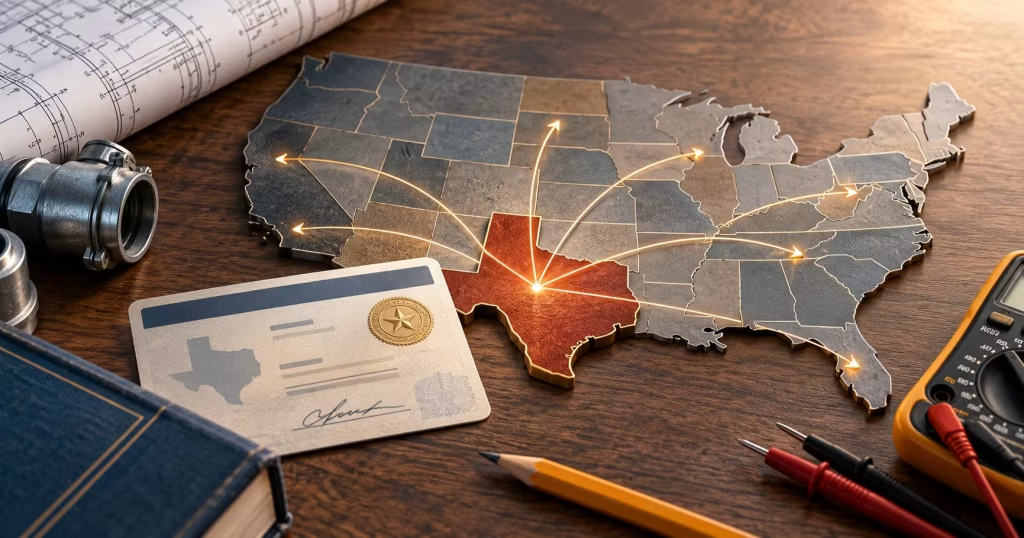
Texas has been signing reciprocity agreements at a pace no other state is matching. Four new ones in roughly seven months, and the department says more are coming.
If you hold a journeyman or master license somewhere else, that’s good news. It also means most of what you’ll read about Texas reciprocity is already out of date, including articles published a few months ago.
Here’s the current picture, where it came from, and the one thing about these lists that almost nobody mentions.
The Current Lists
Texas keeps two separate lists, one for journeyman and one for master. They overlap but they’re not the same, and being on one doesn’t put you on the other. Both come from TDLR’s out-of-state licensing page.
License | States Texas accepts |
|---|---|
Journeyman | Alabama, Alaska, Arkansas, Idaho, Iowa, Nebraska, New Mexico, Oklahoma, South Dakota, Wyoming |
Master | Alabama, Arkansas, Iowa, Louisiana, Nebraska, North Carolina |
Ten states for journeyman, six for master. Alabama, Arkansas, Iowa and Nebraska appear on both.
Ohio is a seventh worth watching. TDLR announced a master electrician agreement with Ohio in June 2026, but it hasn’t yet appeared on the department’s own out-of-state licensing page. If you hold an Ohio master license, call TDLR before you apply rather than relying on the announcement.
Several carry conditions that decide whether you actually qualify. Iowa’s master agreement covers Class A licenses only, and Class B will not reciprocate. Louisiana’s requires you to be a Louisiana resident. North Carolina covers a master electrician or an unlimited electrical contractor license. Arkansas is master electrician specifically.
What Doesn’t Transfer
Reciprocity in Texas covers journeyman and master licenses. That’s it.
Residential wireman, maintenance electrician, sign electrician and the other specialty licenses have no reciprocity agreements at all. If you hold one of those, you’re applying through the standard route and taking the exam, regardless of which state issued it.
The Thing Nobody Tells You About These Lists
Texas announces every new agreement with a press release. Governor quote, executive director quote, the whole thing.
Removals get no announcement.
Montana is the example. It appears in the journeyman list in TDLR’s December 2025 release and again in February 2026. By the March 2026 release it’s gone, and it’s absent from the June 2026 release too. No statement, no explanation, just a state that quietly stopped appearing.
A Montana journeyman reading an article written in February would have every reason to think they could transfer. Plenty of those articles are still up.
So the practical advice is the boring kind: check with TDLR before you send anything. The application fee doesn’t come back if your state came off the list while you weren’t looking.
Why the List Keeps Growing
This isn’t incidental. In May 2025 Texas passed House Bill 11, which directed TDLR and other state agencies to go out and negotiate reciprocity agreements. The department has been doing exactly that ever since.
When | What happened |
|---|---|
December 2025 | Arkansas agreement announced |
February 2026 | Iowa master agreement announced |
March 2026 | Alabama agreements, journeyman and master |
June 2026 | Ohio master agreement announced |
TDLR has said publicly it’s still pursuing more. So if your state isn’t on the list today, it’s worth checking again in a few months rather than assuming the answer is permanent.
What You Need to Qualify
The conditions are consistent across the agreements.
- Hold a journeyman or master license, in good standing, from a reciprocal state.
- Have held that license for at least one year before applying.
- Have earned it by passing that state’s exam.
- Document the on-the-job hours Texas requires: 8,000 for journeyman, 12,000 for master.
Master applicants also need to have held a journeyman license first. Texas asks for two years, with one useful exception: if you’re coming from Alabama, Iowa or Nebraska, it’s one year.
The letter of good standing
Your home state board writes it, not you. It confirms your license is active, in good standing, and was earned by examination.
Some states charge for it, and it’s usually the slowest part of the process, so request it before you fill anything else out.
Fees and Forms
Journeyman | Master | |
|---|---|---|
Application fee | $30 | $45 |
Hours required | 8,000 | 12,000 |
Time license held | 1 year minimum | 1 year minimum |
Each license class has its own reciprocity application form on the TDLR site, including the master electrician reciprocity application. Everything goes in one envelope: the completed form, a copy of your current license, the letter of good standing, and payment.
The form asks about criminal history and any disciplinary action on your record in your former state. Answer it honestly. TDLR reviews these individually and a disclosed issue is a much smaller problem than an undisclosed one.
If Your State Isn’t on the List
You take the Texas exam, and your out-of-state hours generally still count toward eligibility. You’re not starting an apprenticeship over, you’re proving you know the code Texas tests on.
The exam itself splits into two separately timed portions, NEC Knowledge and Calculations, and each needs 70% to pass. In the most recent year TDLR reported, the calculations portion passed about one candidate in five. Our guide to the Texas journeyman electrician exam covers the format, the code book rules and what to expect on the day.
Before You Send Anything
Confirm your state is still on the current list. Check the license class, because journeyman and master lists differ. And request the letter of good standing early, since it’s the step most likely to hold you up.
The fee isn’t refundable, and Texas is a moving target right now in both directions.
Looking at other states? We cover Colorado reciprocity and California reciprocity separately, plus how transferring a license works in general.
Frequently Asked Questions
Which states have electrical license reciprocity with Texas?
For journeyman licenses: Alabama, Alaska, Arkansas, Idaho, Iowa, Nebraska, New Mexico, Oklahoma, South Dakota and Wyoming. For master licenses: Alabama, Arkansas, Iowa, Louisiana, Nebraska and North Carolina. An Ohio master agreement was announced in June 2026 but is not yet listed on TDLR’s out-of-state page. Texas has been adding to both lists regularly, so confirm with TDLR before applying.
Does Texas still have reciprocity with Montana?
Montana appeared in TDLR’s journeyman list in late 2025 and early 2026, but it’s absent from the most recent published lists. Texas announces new agreements but doesn’t announce removals, so check directly with TDLR if you hold a Montana license.
Do I have to take the Texas exam if I have reciprocity?
No. That’s the point of it. You submit the reciprocity application with proof of your existing license instead of testing again.
How long do I need to have held my license?
At least one year before you apply, in good standing.
How much does it cost?
$30 for the journeyman application and $45 for master. Your home state may also charge for the letter of good standing.
Can I transfer a residential wireman or sign electrician license?
No. Texas reciprocity covers journeyman and master licenses only. Specialty licenses go through the standard application and exam process.
Does reciprocity work in both directions?
Usually, but each state sets its own terms and they aren’t always symmetrical. The Ohio agreement, for instance, still requires Ohio’s business law exam for electricians heading that way. Check the rules of whichever state you’re applying to.
How many hours do I need?
8,000 for journeyman and 12,000 for master, documented. Master applicants also need two years holding a journeyman license.
Is Texas adding more states?
Yes. House Bill 11, signed in May 2025, directed TDLR to pursue reciprocity agreements, and four have been announced since. The department says it’s continuing to negotiate, so it’s worth rechecking if your state isn’t currently listed.